

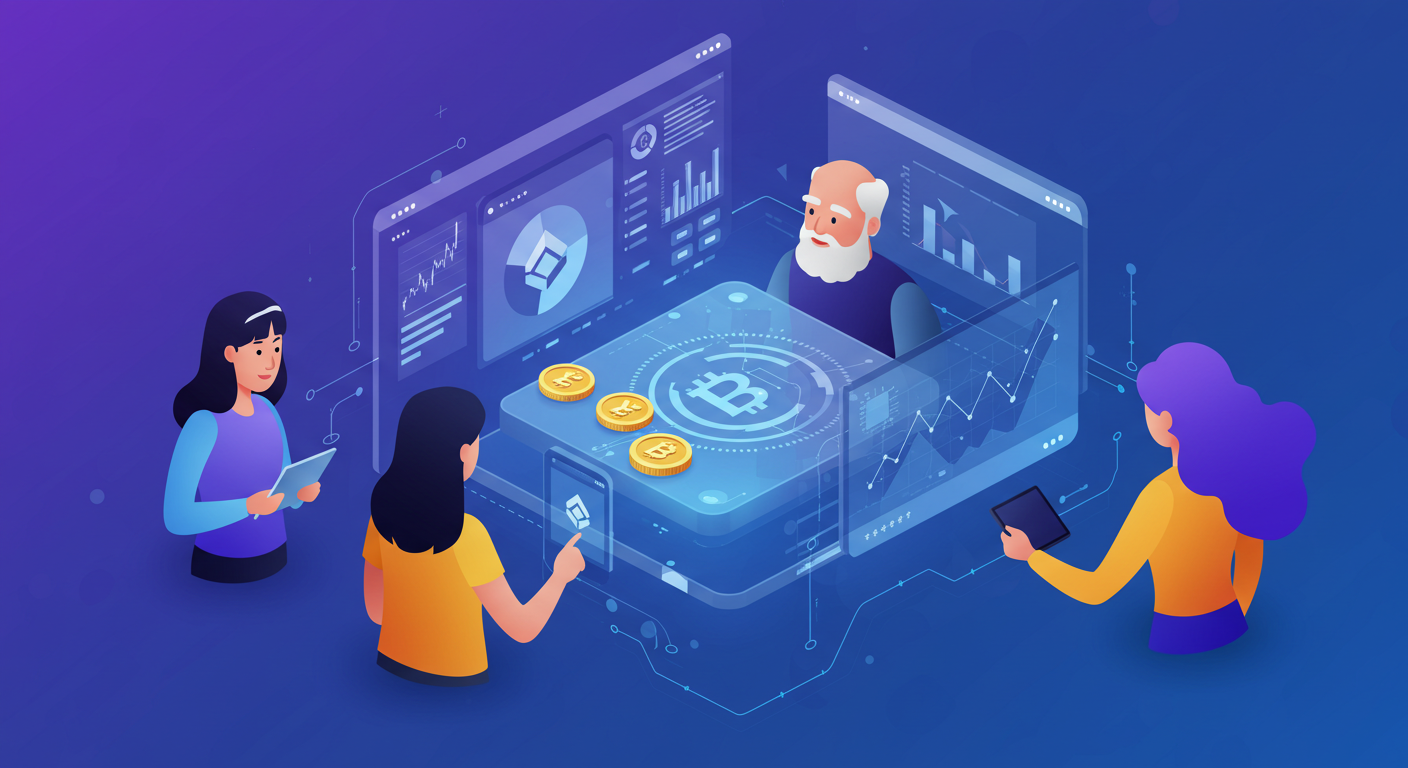
In just over a decade, blockchain technology has reshaped how we think about money, trust, and digital systems. It powers cryptocurrencies like Bitcoin and Ethereum, but its implications go far beyond digital currency. To truly understand crypto technology, we must dig into the underlying architecture — the very building blocks of blockchain. From cryptographic security to consensus algorithms and smart contracts, this article unpacks the core components that make blockchain not only possible but revolutionary.
1. What Is Blockchain Technology?
At its core, blockchain is a distributed ledger — a digital database shared across a network of computers (nodes) that records information in a secure, immutable, and transparent manner. Each blockchain transaction is bundled into a block, which is then connected to the preceding block, creating a sequential “chain” of information.
2. Cryptography: The Foundation of Trust
Public and Private Keys
Each blockchain user possesses a public key, which acts like an address, and a private key, serving as a confidential password. Transactions are signed with the private key and validated through the public key, using asymmetric encryption to guarantee that only the legitimate owner can approve them.
Hash Functions
Blockchain technology depends extensively on cryptographic hash functions, such as SHA-256, used by Bitcoin. A hash function converts any input into a fixed-length string of characters. The output, or hash, is unique — even a tiny change in the input alters the hash completely. This makes tampering with data virtually impossible without detection.
3. Blocks: Data Structures of the Blockchain
Each block contains:
· A timestamp
· A list of transactions
· The hash of the current block
· The hash of the previous block
· A nonce (number used in mining)
By linking each block to the previous one using hashes, blockchain creates a tamper-proof chain. Altering any previous block would disrupt the chain, immediately notifying the whole network.
4. Consensus Mechanisms: Reaching Agreement Without a Central Authority
Blockchains require all participants to agree on the state of the ledger. This is achieved through consensus mechanisms. The two most common are:
Proof of Work (PoW)
Bitcoin uses Proof of Work (PoW), which requires miners to solve intricate mathematical puzzles to verify transactions and create new blocks. It’s secure but energy-intensive.
Proof of Stake (PoS)
Used by Ethereum 2.0 and other modern blockchains, PoS allows validators to propose and validate blocks based on how much crypto they "stake" or lock up as collateral. It's energy-efficient and scalable.
Other mechanisms include Delegated Proof of Stake (DPoS), Proof of Authority (PoA), and Byzantine Fault Tolerance (BFT), each with trade-offs between security, speed, and decentralization.
5. Smart Contracts: Automating Transactions
A smart contract is a self-executing contract with terms written directly into code. It runs on the blockchain and automatically enforces the agreement once conditions are met.
Use cases include:
· Decentralized finance (DeFi) protocols
· Token sales (ICOs, IDOs)
· Supply chain management
· Digital identity verification
Bypassing intermediaries, smart contracts make transactions faster, less expensive, and trust-free.
6. Tokens and Cryptocurrencies
Cryptocurrencies are digital assets that use blockchain technology to function as a medium of exchange, store of value, or unit of account. Each blockchain can have its native currency (e.g., BTC for Bitcoin, ETH for Ethereum), as well as custom tokens created on top of it.
7. Nodes and Network Infrastructure
A node is defined as a device that forms part of the blockchain infrastructure.
Lightweight nodes: Store only part of the blockchain and rely on full nodes for verification
Mining nodes/Validator nodes: Mining nodes or validator nodes compete to add new blocks by following the consensus protocol. Together, nodes maintain the integrity and continuity of the blockchain, enabling redundancy and preventing single points of failure.
8. Decentralized Applications (dApps)
Built on top of blockchain platforms, dApps (decentralized applications) function without centralized servers or control. They interact with smart contracts and are often open-source.
Examples of dApps include:
Uniswap – decentralized exchange (DEX)
Aave – lending and borrowing platform
Axie Infinity – blockchain-based game
ENS – decentralized domain name service
dApps are reshaping industries like finance, gaming, healthcare, and identity.
9. Layer 1 vs Layer 2 Solutions
As blockchain adoption increases, scalability becomes a challenge.
Layer 1
Refers to the base blockchain protocol (e.g., Bitcoin, Ethereum). Improvements at this level involve changing the core protocol (e.g., Ethereum’s move to PoS).
Layer 2
Layer 2 solutions, developed atop Layer 1, enhance speed and lower costs by processing transactions off the main chain.
Lightning Network (Bitcoin)
Optimism and Arbitrum (Ethereum)
zk-Rollups – combine multiple transactions into one
These solutions are crucial for mainstream adoption and usability.
10. Blockchain Interoperability
Currently, most blockchains operate in silos. Interoperability allows blockchains to communicate and share data, enabling more complex and flexible decentralized systems.
Projects like Polkadot, Cosmos, and Chainlink’s CCIP are working to bridge different networks, making it easier to transfer tokens and information across blockchains.
11. Privacy and Security in Blockchain
Despite being transparent, blockchain can also ensure privacy through advanced cryptography.
Zero-Knowledge Proofs (ZKPs)
Zero-Knowledge Proofs enable validation of knowledge without making the knowledge public.
Privacy Coins
Privacy-focused cryptocurrencies such as Monero (XMR) and Zcash (ZEC) emphasize anonymity by concealing transaction information.
Common Security Threats
51% attacks – where a group controls most of the network’s hashing power
Smart contract bugs – Vulnerabilities in smart contracts can be targeted and exploited by hackers.
Phishing and private key leaks
Security audits and responsible development practices are essential for maintaining trust.
12. Use Cases Beyond Cryptocurrency
Blockchain is not just about money. Some of its real-world applications include:
Supply Chain Transparency – Track goods from origin to destination (e.g., IBM Food Trust)
Healthcare – Secure patient records and data sharing
Voting Systems – Tamper-proof and verifiable digital voting
Real Estate – Tokenized property and instant ownership transfer
Digital Identity – Self-sovereign identity and KYC on-chain
The potential is massive — anywhere trust, transparency, and permanence are needed.
13. Limitations and Challenges
Despite its promise, blockchain has challenges:
Scalability – Network congestion and slow speeds
Energy consumption – Especially with PoW systems
Regulatory uncertainty – Many jurisdictions are still catching up
User experience –Complicated interfaces combined with insufficient user education
Interoperability gaps – Siloed ecosystems
Addressing these challenges will shape the future development of blockchain technology.
14. The Future of Blockchain Technology
We are entering an era of modular, scalable, and user-friendly blockchain systems. Key trends include:
AI integration for smarter dApps
Real-world asset (RWA) tokenization
Decentralized identity and reputation systems
Regenerative finance (ReFi) for climate-positive projects
CBDCs (Central Bank Digital Currencies)
As developers, users, and governments align, blockchain is set to become as fundamental to digital life as the internet itself.
Final Thoughts
Understanding how crypto technology works means more than memorizing buzzwords — it means grasping the interlocking pieces that form the blockchain puzzle. From hashing algorithms to smart contracts, from consensus to decentralization, each layer builds upon the last to create a secure, efficient, and transparent system for the digital age.
The blockchain revolution is just beginning. As the technology matures, those who understand its building blocks will be best positioned to shape its future — whether as developers, investors, entrepreneurs, or everyday users.








Write a comment ...