
Introduction
In the modern digital economy, customer expectations have evolved dramatically. Consumers now demand seamless, personalized interactions across multiple touchpoints, expecting organizations to anticipate their needs, preferences, and behaviors. Traditional customer relationship management strategies, while valuable, often rely on historical data and static segmentation, limiting an organization’s ability to deliver truly individualized experiences.
Adaptive AI is redefining customer-centricity by enabling hyper-personalization at scale. Unlike traditional analytics, adaptive AI continuously learns from real-time customer interactions, market signals, and operational data, offering actionable insights that guide engagement strategies. Enterprises leveraging adaptive AI development solutions, adaptive AI development services, or partnering with adaptive AI development companies can transform the way they understand, interact with, and delight customers.
This article explores how adaptive AI drives hyper-personalized customer experiences, its applications across industries, and its long-term impact on loyalty, retention, and revenue growth.
Understanding Adaptive AI in Customer-Centric Strategies
Adaptive AI development involves creating intelligent systems that evolve in real-time, learning from new data to enhance predictive and prescriptive capabilities. In customer experience management, this adaptive intelligence enables enterprises to:
Predict Customer Needs: Anticipate what products or services a customer may require based on behavior and contextual data.
Prescribe Personalized Actions: Recommend marketing interventions, product offers, or support solutions tailored to individual preferences.
Enhance Engagement Across Channels: Integrate insights into digital, in-store, and post-purchase touchpoints for cohesive experiences.
Adaptive artificial intelligence development solutions allow enterprises to operationalize these insights at scale, ensuring consistent and relevant experiences across every customer interaction.
The Limitations of Traditional Personalization
While traditional personalization techniques—such as email segmentation or purchase history-based recommendations—have been widely used, they have notable limitations:
Static Segmentation: Customers are often grouped into broad categories, which may not reflect real-time changes in behavior or preference.
Limited Context Awareness: Traditional analytics rarely incorporate external factors, such as market trends or social sentiment, into personalization strategies.
Delayed Feedback Loops: Adjusting campaigns or offerings based on customer behavior often takes weeks or months, reducing responsiveness.
Inability to Scale Hyper-Personalization: Tailoring experiences individually for millions of customers is impractical without adaptive AI.
Adaptive AI development services address these gaps by creating systems that continuously adapt, scale, and provide actionable guidance for customer engagement.
How Adaptive AI Enables Hyper-Personalized Experiences
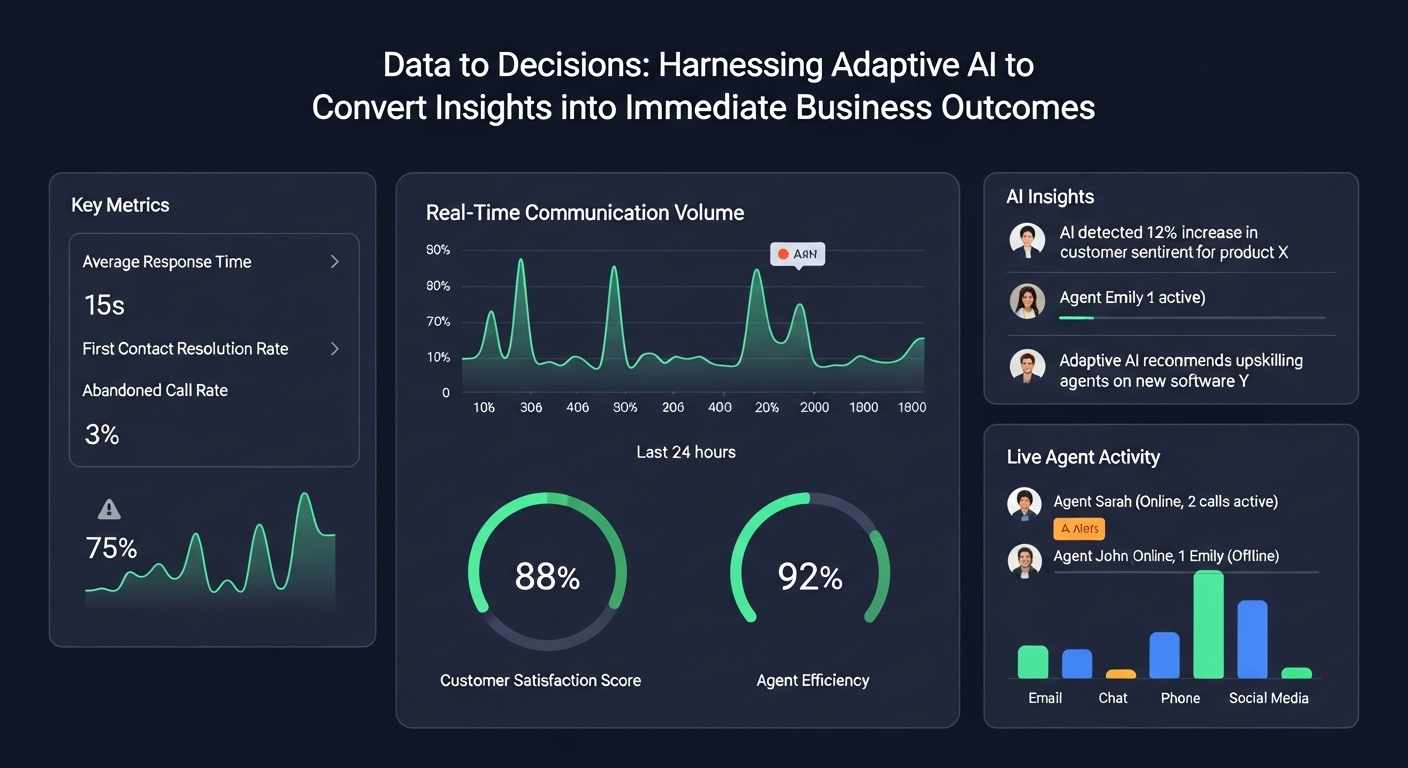
Hyper-personalization requires more than analyzing past behaviors; it demands real-time insights, predictive modeling, and prescriptive recommendations. Adaptive AI development solutions achieve this by integrating multiple data streams and leveraging machine learning algorithms to understand each customer uniquely.
Real-Time Customer Insights
Adaptive AI development services process vast amounts of transactional, behavioral, and contextual data to provide real-time insights into customer needs. Examples include:
Predicting product preferences based on browsing behavior and purchase history.
Anticipating service needs before customers raise support tickets.
Identifying potential churn risks through engagement patterns.
Adaptive artificial intelligence development solutions provide enterprises with a continuously updated understanding of their customer base, enabling timely and relevant interventions.
Personalized Recommendations and Interventions
Once insights are generated, adaptive AI development solutions prescribe specific actions to enhance the customer experience:
Recommending personalized offers or promotions based on individual purchasing patterns.
Optimizing content delivery on websites, mobile apps, or social media platforms for maximum engagement.
Suggesting next-best actions for customer service representatives to resolve issues efficiently.
Adaptive AI development companies ensure these capabilities are integrated seamlessly into enterprise systems, allowing organizations to act on insights at scale.
Predictive Engagement Across Channels
Customers interact with brands across multiple channels, from digital platforms to physical stores. Adaptive AI development services enable enterprises to:
Predict the most effective channels for engagement.
Tailor messaging and offers for each channel based on real-time context.
Maintain consistent personalization across digital and offline interactions.
Adaptive artificial intelligence development solutions help organizations unify customer data across touchpoints, ensuring cohesive and impactful experiences.
Industry Applications of Adaptive AI for Hyper-Personalization
Adaptive AI development solutions are transforming customer-centric strategies across industries:
Retail and E-Commerce
Adaptive AI development services analyze browsing patterns, past purchases, and social signals to recommend products tailored to each consumer.
Adaptive artificial intelligence development solutions optimize pricing, promotions, and inventory based on demand forecasts.
Hyper-personalized loyalty programs increase engagement, retention, and revenue.
Financial Services
Adaptive AI development solutions predict customer needs for financial products, credit offerings, and investment advice.
Adaptive artificial intelligence development services enhance fraud detection and risk assessment while personalizing financial guidance.
Personalized communication strategies improve client trust and satisfaction.
Healthcare
Adaptive AI development companies provide insights into patient behavior, treatment adherence, and preventive care opportunities.
Adaptive artificial intelligence development solutions recommend personalized health interventions and optimize care pathways.
Patient engagement is improved through real-time, tailored messaging and support.
Media and Entertainment
Adaptive AI development services curate content based on individual preferences and engagement patterns.
Adaptive artificial intelligence development solutions recommend personalized media consumption schedules and notifications.
Hyper-personalization increases viewer retention, subscriptions, and engagement metrics.
Benefits of Hyper-Personalization Through Adaptive AI
The adoption of adaptive AI development solutions for customer-centricity offers multiple strategic benefits:
Increased Customer Loyalty: Personalized experiences foster emotional connections and long-term relationships.
Higher Revenue Potential: Targeted offers and recommendations drive upselling and cross-selling opportunities.
Operational Efficiency: Automated personalization reduces manual segmentation and campaign management efforts.
Proactive Engagement: Predictive insights allow organizations to address customer needs before they escalate.
Competitive Advantage: Adaptive AI development companies provide proprietary intelligence that differentiates enterprises in saturated markets.
Implementation Considerations
Adopting adaptive AI development solutions for hyper-personalization requires careful planning:
Data Integration: Enterprises must consolidate customer data from multiple sources to enable real-time learning.
Ethical AI Practices: Preserving privacy, ensuring transparency, and mitigating bias are essential.
Change Management: Employees and teams should be trained to leverage AI insights effectively.
Technology Infrastructure: Scalable cloud-based platforms, robust analytics engines, and AI development frameworks are necessary.
Partnership with Experts: Collaborating with adaptive AI development companies ensures best practices in deployment, optimization, and scaling.
Adaptive artificial intelligence development services help enterprises navigate these challenges to ensure successful implementation.
Future Outlook for Hyper-Personalized Customer Experiences
As adaptive AI continues to evolve, its impact on customer-centric strategies will expand:
Real-Time Behavioral Adaptation: AI will continuously refine personalization strategies as customer behavior evolves.
Integrated Predictive Ecosystems: AI systems will integrate data from IoT devices, social media, and external market signals for more accurate predictions.
Human-AI Collaboration: Customer-facing teams will receive prescriptive guidance to enhance human interactions with AI insights.
Cross-Enterprise Intelligence: Adaptive AI development solutions will link marketing, sales, customer service, and operations to ensure unified customer experiences globally.
Enterprises that adopt adaptive AI development solutions today will establish leadership in delivering hyper-personalized, data-driven experiences that drive long-term loyalty and growth.
Conclusion
Customer-centricity in the digital era requires more than segmentation or static personalization. Adaptive AI development solutions transform enterprises by delivering hyper-personalized experiences informed by real-time data, predictive insights, and prescriptive recommendations.
By leveraging adaptive AI development services and partnering with adaptive AI development companies, organizations can:
Predict and anticipate customer needs.
Optimize interactions across channels and touchpoints.
Increase loyalty, revenue, and operational efficiency.
Gain a sustainable competitive advantage through actionable intelligence.
Adaptive artificial intelligence development solutions ensure that enterprises remain agile, responsive, and customer-focused in a constantly evolving marketplace. For organizations striving to lead in customer experience, adaptive AI is not just a tool—it is a strategic imperative.






Write a comment ...