
Introduction
The marketing world is changing faster than ever. Customer expectations are rising, attention spans are shrinking, and competition is intensifying across every digital channel. Despite access to massive amounts of data, most marketing teams still struggle to connect with customers on a truly personal level or to anticipate what drives engagement and conversion.
The reason? Traditional marketing systems are built for static analysis, not real-time adaptability. That’s where adaptive AI steps in — an intelligent, continuously learning system that transforms marketing from reactive to predictive. It doesn’t just tell marketers what happened; it anticipates what will happen next.
Organizations working with an adaptive AI development company or implementing adaptive AI development services are discovering that adaptive AI is more than just a technology upgrade. It’s a marketing revolution — one that empowers teams to understand customers deeply, optimize campaigns dynamically, and deliver personalized experiences that consistently outperform expectations.
What is Adaptive AI in Marketing?
Adaptive AI is an advanced form of artificial intelligence designed to learn and evolve in real time. Unlike traditional AI models that rely on static data or fixed rules, adaptive AI continuously ingests new information and adjusts its strategies accordingly. This makes it especially valuable for marketing, where customer behavior and preferences can shift rapidly.
How It Works
Data Integration: Collects customer data from multiple touchpoints — web, mobile, social, CRM, and offline sources.
Behavioral Analysis: Identifies emerging patterns and behavioral trends.
Predictive Modeling: Forecasts outcomes such as conversions, churn, and engagement likelihood.
Dynamic Optimization: Adjusts targeting, creative assets, and delivery timing based on real-time performance.
Continuous Learning: Improves accuracy and efficiency with every new data point.
Key Features
Predictive analytics for customer intent.
Real-time campaign optimization.
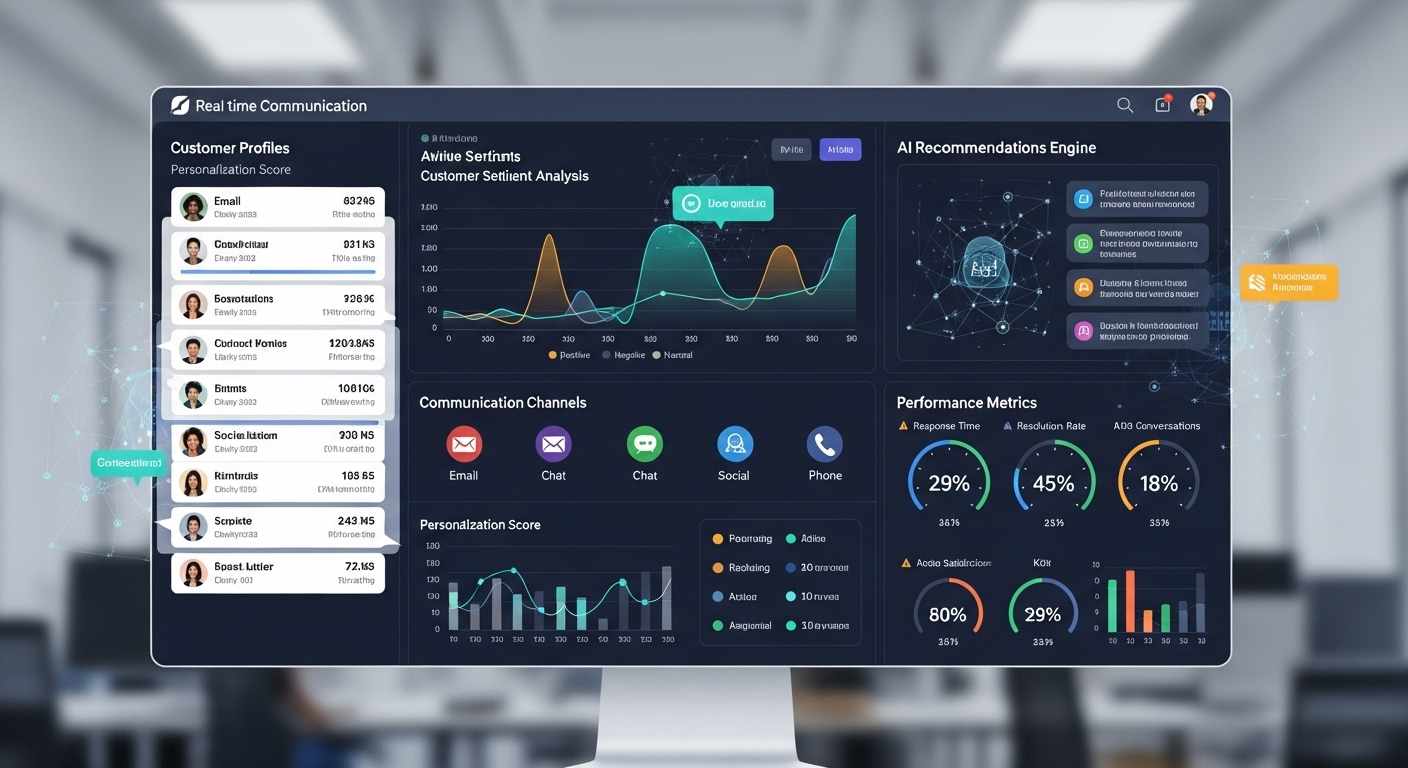
Multi-channel personalization.
Automated content and recommendation delivery.
Cross-platform integration with marketing and CRM systems.
Why Adaptive AI is Transforming Marketing
Traditional marketing tools provide descriptive insights — they can tell you what happened but not why it happened or what to do next. Adaptive AI bridges that gap by enabling predictive and prescriptive marketing.
It empowers teams to:
Understand customer needs before customers express them.
Personalize campaigns with precision and speed.
Eliminate wasted ad spend through real-time optimization.
Respond instantly to changing market dynamics.
Example
A financial services company using adaptive AI noticed that certain customers checked loan rates multiple times but never completed applications. The system analyzed their behavior, identified a hesitation point around repayment flexibility, and automatically adjusted messaging to highlight customizable payment options. Conversion rates jumped by 35%.
This is the essence of adaptive AI — continuous, data-driven refinement that drives measurable business outcomes.
How Adaptive AI Improves Marketing ROI
1. Real-Time Decision Making
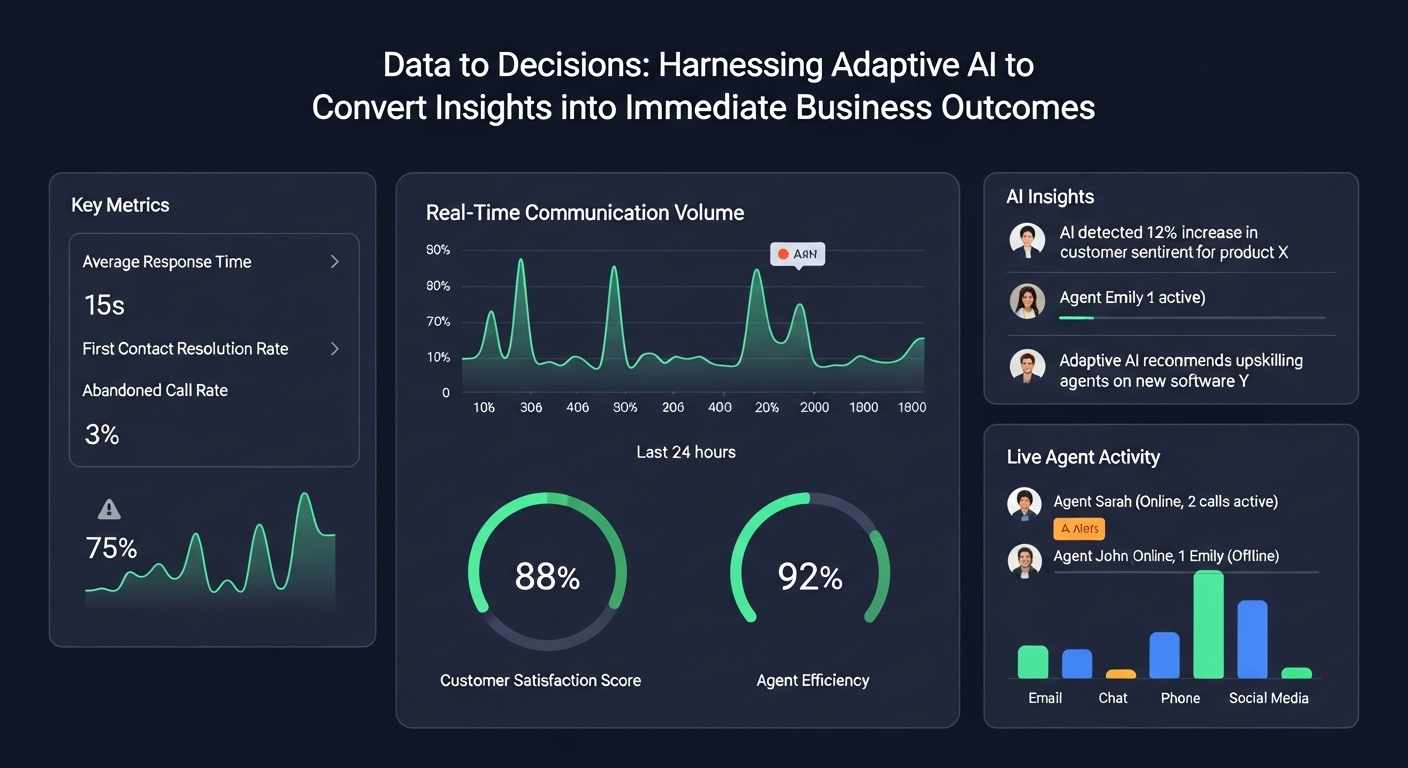
Adaptive AI enables marketers to make data-driven decisions in the moment. When customer behavior changes, AI adjusts campaigns instantly to maintain relevance and engagement.
2. Smarter Segmentation
Instead of static audience lists, adaptive AI creates dynamic segments that evolve with each customer’s journey. This ensures messaging always reflects current intent and behavior.
3. Predictive Personalization
By understanding not only what customers have done but what they are likely to do next, adaptive AI delivers hyper-personalized experiences that drive stronger engagement and loyalty.
4. Optimized Resource Allocation
AI identifies which campaigns, channels, and audiences deliver the highest ROI, allowing marketing teams to focus resources where they’ll have the most impact.
5. Continuous Performance Improvement
Every campaign, click, and conversion provides feedback that improves future performance. The more the system learns, the more effective it becomes.
Benefits of Adaptive AI for Marketing Teams
Increased Conversion Rates: AI-driven personalization delivers higher engagement and conversion.
Improved Customer Retention: Predictive insights enable proactive customer engagement.
Operational Efficiency: Automation reduces manual effort in campaign management and optimization.
Scalable Personalization: Delivers unique experiences to millions of customers simultaneously.
Data-Driven Confidence: Marketing decisions are supported by predictive accuracy rather than intuition.
Higher ROI: Real-time optimization minimizes wasted spend and maximizes returns.
Companies leveraging adaptive AI development solutions consistently report measurable improvements across every key marketing metric — from engagement and retention to revenue growth.
Challenges Adaptive AI Solves
Unpredictable Customer Behavior: Predicts and responds to changing patterns before they affect outcomes.
Low Campaign Relevance: Ensures every message and offer aligns with real-time customer needs.
Complex Multi-Channel Management: Synchronizes campaigns seamlessly across all platforms.
Overwhelming Data Volumes: Simplifies complex data analysis into actionable insights.
Inefficient Testing and Optimization: Automates A/B testing and adapts campaigns dynamically.
Adaptive AI solution development allows businesses to overcome long-standing challenges in marketing efficiency and personalization.
Implementing Adaptive AI in Your Marketing Strategy
Define Business Goals: Establish clear objectives such as higher conversion rates, customer retention, or brand engagement.
Partner with an Adaptive AI Development Company: Work with experts who specialize in creating AI-driven marketing platforms tailored to your needs.
Integrate Data Systems: Connect CRM, analytics, advertising, and customer engagement platforms to create a unified data ecosystem.
Train AI Models: Feed historical and real-time data into adaptive models to enhance predictive accuracy.
Deploy Gradually: Begin with specific campaigns or use cases and scale as results materialize.
Monitor and Adjust: Continuously evaluate campaign outcomes and refine AI algorithms.
Ensure Ethical Use: Maintain transparency and comply with data privacy regulations.
Industries Leading the Adaptive AI Revolution
Retail and E-Commerce: Personalizes recommendations, pricing, and promotions.
Technology and SaaS: Optimizes onboarding, upsell campaigns, and customer retention.
Finance and Banking: Delivers predictive offers, fraud alerts, and engagement strategies.
Healthcare: Enables patient personalization for communications and care engagement.
Travel and Hospitality: Predicts booking preferences and loyalty behaviors.
Entertainment and Media: Curates personalized content and advertising experiences.
Adaptive AI development services can be customized to fit the unique demands of each industry, ensuring measurable impact and faster ROI.
Best Practices for Marketing Teams
Start with Data Quality: Clean, structured, and comprehensive data is the foundation of successful AI.
Identify Quick-Win Use Cases: Launch adaptive AI in areas with high impact and measurable results.
Combine AI with Human Insight: Use AI-driven insights to guide strategy, not replace creativity.
Establish Continuous Feedback Loops: Monitor performance and refine models regularly.
Promote Cross-Team Collaboration: Align marketing, data, and technology teams to ensure cohesive execution.
Focus on Ethical AI: Maintain customer trust through transparency and responsible data use.
The Future of Adaptive AI in Marketing
Emotionally Intelligent AI: Future models will analyze tone, sentiment, and emotion for even deeper personalization.
Autonomous Marketing Systems: Campaigns that plan, execute, and optimize themselves with minimal human input.
Voice and Conversational AI: Expanding personalization through AI-driven voice assistants and chatbots.
Predictive Experience Design: AI will forecast entire customer journeys and optimize touchpoints proactively.
Privacy-First AI Marketing: New adaptive systems will balance personalization with security and compliance.
As adaptive AI development solutions evolve, they will redefine what marketing success looks like — blending creativity, data, and intelligence into a unified, responsive system.
Conclusion
Adaptive AI is not just another technological advancement — it’s a marketing revolution. It transforms how teams understand customers, design campaigns, and deliver value. By leveraging adaptive AI development services or collaborating with an adaptive AI development company, businesses can translate data into actionable insights, deliver hyper-personalized experiences, and achieve unprecedented marketing ROI.
Adaptive AI solution development empowers organizations to move from reactive marketing to predictive engagement, enabling them to stay ahead of competitors and exceed customer expectations. For brands that embrace it today, adaptive AI isn’t just the future of marketing — it’s the secret weapon reshaping success in the present.





Write a comment ...